



Dual Wall Reverse Circulation Rotary System
The original RC - Reverse Circulation method utilises a conventional Down the Hole Hammer. The crossover sub, situated above the Hammer in the drill string is manufactured with vertical slots that are designed to direct the cuttings into the center of the dual walled pipes. This enables the most efficient method for collecting samples. The crossover sub allows the down the hole hammer to operate while reversing the flow of the cutting up the inner pipe.
How Does the Dual Wall Reverse Circulation Rotary System Work?
A dual wall RC drill pipe is a pipe within a pipe: an outer tube that carries the drilling load, and a removable inner tube held in the center.
- Compressed air goes down the gap between the two tubes (the annulus) to the hammer or bit.
- Cuttings come back up the inner tube to the surface, then through a hose to a cyclone, where samples are collected.
- The sample never touches the hole wall on the way up. That’s the main reason RC gives cleaner, depth-accurate samples than conventional open-hole air drilling, where loose material from higher up can fall in and mix with the sample.
- A shroud slightly smaller than the bit stops air escaping up the outside of the pipe, so it’s forced back up the center.
What are the advantages of the Dual Wall Reverse Circulation Rotary System?
- Clean, continuous samples, with no drilling mud or additives.
- Speed and cost: one source gives about 150 m per 12-hour shift for RC against about 30 m for diamond coring, at a much lower cost per metre.
- Hole stability: the pipe supports the hole in loose ground while drilling and sampling.
- Water sampling: samples from specific water-bearing layers can be lifted to the surface.
Typical Components of a Dual Wall Reverse Circulation Rotary Drill String

Top Head Adaptor
5.5DC to 400DS

Swivel Adaptor Inner Tube
Inner Tube 32 1/4"
Inner Tube 34 1/4"
Inner Tube 36 7/8"

Saver Sub

Dual Wall RC Drill Pipes
RC Drill Pipes 5'
RC Drill Pipes 10'
RC Drill Pipes 15'
RC Drill Pipes 20'

Crossover Sub
2 3/8" Twin Slot
2 3/8" 3 Slot
2 7/8" Twin Slot
2 7/8" 3 Slot
2 7/8" Twin Slot 4 1/2"
2 7/8" 3 Slot 4 1/2"
2 7/8" Twin Slot 5"
 Interchange Top Sub
4 1/4" OD
4 1/2" OD
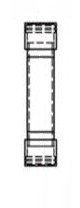
Interchange Inner Tube
4 3/8" OD
4 5/8" OD
4 7/8" OD
5" OD
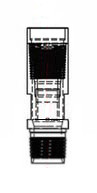
Blow Down Sub

Blow Down Sub Inner Tube
Aerator 4"
Aerator Inner tube

Blow Up Sub 4"
Limitations of the Dual Wall Reverse Circulation Rotary System?
- Inner tube wear and seal failure are the main risks. A worn inner tube or failed O-ring lets cuttings leak or mix, which ruins sample integrity.
- Thread wear is the other main wear point, made worse by abrasive ground and deep holes.
- Depth: deeper holes mean more pressure loss through the string, heavier strings, harder deviation control and more risk of stuck pipe.
- Air requirements: compressors must keep up-hole velocity high (roughly 70 ft/s, or about 1,400 m/min) and be well filtered, because compressor oil can contaminate samples.
- Thread compound: thread grease and down-hole lubricants can rarely show up as contaminants in water samples, which matters for environmental work.
Maintenance Tips for Dual Wall Reverse Circulation Rotary System?
- Inspect regularly: check threads, inner tubes and O-rings, and replace seals before they fail.
- Look after the threads: use thread protectors when pipes are stored or moved.
- Filter the air: keep compressor air clean, and record any water injected into the air stream.
- Clear blockages fast: clear wet-sample blockages promptly to avoid corrosion inside the inner tube.